
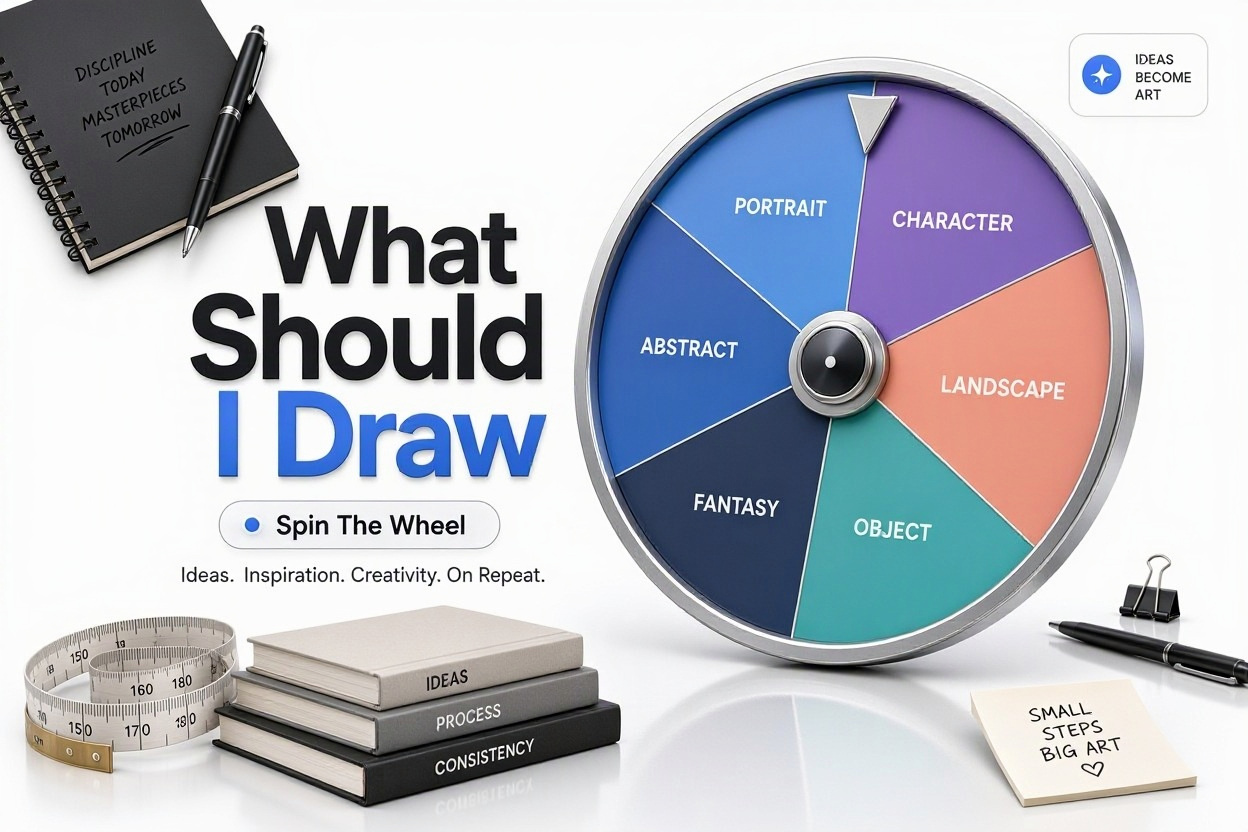
Staring at a blank page wondering what should i draw spin the wheel is a feeling almost every artist knows well. You want to create something, but no idea feels exciting enough to start. That hesitation can eat up an entire afternoon. A random drawing prompt wheel fixes that by making the choice for you in seconds.
Instead of scrolling for inspiration, you spin and commit to whatever lands. It could be a sleepy owl, a haunted lighthouse, or a robot drinking coffee. The randomness removes pressure and turns drawing into play again. In this article, you will learn how drawing wheels work, what categories to include, how to build your own, and how to use results to build real skills. You will also get themed idea lists for kids, beginners, and advanced artists, plus tips for turning a quick spin into a finished piece.
How Random Prompts Help Artists Get Unstuck
Creative block rarely comes from lack of talent. It comes from too many choices and fear of wasting time on the wrong idea. A random prompt narrows your focus to one clear starting point. With that decision made, your brain can shift from worrying to creating.
Randomness also breaks habits. Most of us draw the same faces, poses, and subjects on repeat. A wheel forces you into unfamiliar territory, like drawing a market scene when you usually draw portraits. That stretch is where growth happens.
What a What Should I Draw Spin the Wheel Actually Does
A what should i draw spin the wheel is a simple interactive tool that picks a drawing idea at random. You load it with words or phrases, tap spin, and it lands on one result. Some wheels pick a single subject, while others combine character, setting, style, and color palette in one go.
Teachers use them for warm-ups, hobby artists use them for daily challenges, and kids love them because it feels like a game. The core appeal is low commitment. You did not choose the prompt, so you feel less judged on the outcome and more free to experiment.
Best Categories to Add to Your Drawing Wheel
A good wheel needs balance. If every option is animals, you will get bored fast. Mix easy subjects with tricky ones, familiar objects with imaginative scenes. Think in groups like characters, creatures, objects, places, actions, emotions, styles, and color limits.
You should also adjust difficulty based on who is using it. A wheel for a seven-year-old should not be full of complex architecture or anatomy challenges. A wheel for an intermediate artist can include perspective, lighting, and storytelling prompts to keep things interesting.
- Characters: tired knight, street vendor, kid with oversized backpack, old sailor, garden witch
- Creatures: sleepy sloth, crystal fox, grumpy cat dragon, deep sea jellyfish, mossy turtle
- Objects: chipped teapot, retro game console, paper lantern, worn boots, music box
- Places: night market, treehouse library, desert gas station, snowy train platform
- Actions and moods: dancing in rain, first snowfall wonder, quiet morning stretch, lost in a big city
- Style twists: chibi, pixel art, ink only, three-color limit, continuous line
How to Make Your Own Drawing Idea Wheel
Building your own wheel takes less than fifteen minutes and works better than a generic one because you control the mix. Start with 20 to 30 ideas total. That gives enough variety without making results feel chaotic. Write them on paper slips for a jar, or type them into a free online spinner.
Sort your list before you add it. Aim for about half comfort-zone subjects you enjoy, a quarter skill-builders you avoid, and a quarter wildcards that are silly or surreal. This ratio keeps motivation high while still pushing you forward.
Set Up Your Wheel in Five Quick Steps
1. Pick your goal for the next two weeks, like better hands, backgrounds, or color confidence.
2. Brainstorm 30 prompts across characters, creatures, objects, places, and styles.
3. Remove duplicates and anything that feels boring or frustrating to you right now.
4. Enter the final list into a spinner app or write each on a card for physical spins.
5. Decide your time rule, such as 10-minute sketch, 30-minute study, or full illustration.
Physical wheels and jars work well if you want less screen time. Digital spinners are better if you want to save multiple themed wheels and reshuffle them easily. Many artists keep three wheels: quick warm-ups, skill practice, and fun weekend pieces. For more warm-up ideas that pair well with timed spins, check [Internal Link: Easy Drawing Ideas for Beginners] during your next practice session.
Creative Ways to Use a Drawing Wheel for Practice
A wheel is more than a one-time idea picker. Used with intent, it becomes a training tool. The trick is to add constraints to each spin. Instead of just drawing what lands, assign a time limit, a medium, or a specific focus like lighting or expression.
You can also spin twice and combine results. A cactus plus a lighthouse becomes a desert lighthouse tended by a cactus keeper. Combining forces storytelling and composition thinking, which helps finished pieces feel less static and more memorable.
Try pairing your spins with focused drills. If you land on hands holding a lantern, spend ten minutes on thumbnail gestures before the final sketch. If you land on a street scene, practice one-point perspective boxes first. Small prep work makes the final drawing stronger without killing the fun.
Drawing Wheel Ideas for Kids and Beginners
For young artists, keep prompts concrete, friendly, and easy to picture. Abstract concepts like nostalgia or isolation are hard for kids to translate. Familiar animals, foods with faces, simple vehicles, and magical twists work best because they invite color and personality.
Beginners of any age benefit from low-pressure prompts that teach basics naturally. Drawing a house cat loafing in different spots teaches shapes and posture. Drawing favorite snacks as characters teaches facial expressions and simple shading. Success builds confidence faster than complex challenges.
Best Kid-Friendly Wheel Prompts by Theme
Animals With Personality: smiling axolotl, penguin wearing a scarf, dog astronaut, bunny baker, turtle with a rocket shell
Food Friends: happy taco, sleepy pancake stack, strawberry knight, noodle dragon, grumpy broccoli
Easy Magic: fairy door on a tree, dragon egg in a nest, tiny house on a mushroom, cloud castle, friendly ghost with a balloon
Outdoor Fun: beach picnic, park swing, camping tent under stars, kite stuck in a tree, puddle after rain
Keep sessions short for kids, around 10 to 15 minutes per spin. Let them re-spin once if they truly dislike the result, but encourage them to add one silly detail to make it their own. Stickers, stamps, or a finished gallery wall help maintain excitement over time.
Fun Themes and Challenges for Experienced Artists
Once basics feel comfortable, use the wheel to target weak spots. Many intermediate artists avoid backgrounds, hands, animals in motion, or night lighting. Put those directly on the wheel so you cannot skip them. Deliberate exposure turns dreaded subjects into strengths.
Themed wheels also prevent art from feeling repetitive on social media. Instead of posting another front-facing portrait, spin a combination like elderly botanist plus greenhouse at dusk plus limited teal and orange palette. Constraints often lead to more original work than total freedom.
Character Design Combo Wheel
Spin once for each column and combine into one design. This is excellent for portfolio variety and story thinking.
Character Type: apothecary, lighthouse keeper, bike courier, mushroom forager, retired pirate
Distinct Feature: oversized coat, glowing freckles, mechanical arm, braided hair with charms, round glasses
Setting Hint: foggy pier, rooftop garden, crowded train, snowy shrine, neon alley
Mood and Light: cozy lantern glow, cold morning blue, sunset haze, rainy neon reflections, candlelit interior
Try a 60-minute challenge format: 10 minutes for thumbnails, 35 minutes for rendering, 15 minutes for cleanup and background accents. Post both the wheel result and the final piece so viewers see your process. That behind-the-scenes context often gets stronger engagement than the finished art alone.
Digital Tools and Apps for Random Drawing Prompts
You do not need fancy software to run a drawing wheel. Most artists use free browser spinners where you paste a list and click to spin. Look for features like saving multiple wheels, removing a result after it lands, shuffling, and fullscreen mode for classroom use.
Drawing apps can complement the wheel nicely. Use a random palette generator for color practice, a pose reference site when you land on action prompts, and a timer app for sprint sessions. Keeping your wheel list in a notes app lets you add ideas whenever inspiration strikes.
Quick Tips for Choosing a Good Spinner Tool
- Save option: keep separate wheels for warm-ups, characters, environments, and style challenges
- Edit easily: add or delete entries without rebuilding the whole list
- No account needed: useful for classrooms or quick sharing with friends
- Fair randomness: avoids repeating the same three results in a row
- Mobile friendly: spin from your phone while sketching traditionally
Avoid tools overloaded with ads or popups if you plan to use them with kids. A clean interface keeps attention on drawing. If you teach, test the word list first to remove anything too difficult or inappropriate for the age group.
How to Turn Wheel Results Into Finished Artwork
A spin gives you a starting point, not a finished plan. Take two minutes to turn the phrase into a visual question. If you land on lonely robot in a flower field, ask what time of day it is, why the robot is there, and what the focal point should be. Those answers guide composition.
Do small thumbnails next. Draw three tiny rectangles and try different camera angles: close-up, wide shot, and side view. Pick the one with the clearest silhouette and best sense of story. This step prevents hours of rework later and improves piece quality dramatically.
Common Mistakes That Weaken Wheel Drawings
- Drawing too small in the center of the page with no background planning
- Ignoring light direction, which flattens even good character designs
- Over-detailing the character before the pose and proportions feel right
- Using every color available instead of picking a limited 3 to 5 color scheme
- Quitting at the awkward middle stage when the sketch looks messy
Finish with a simple polish pass. Check values by viewing in grayscale, clean up edges around the focal area, and add one texture or lighting accent like rim light or falling leaves. You do not need to render everything. A clear focal point with supporting simplicity often looks more professional. For help planning backgrounds and lighting after a spin, see [Internal Link: Simple Background Drawing Tutorials] to build out scenes without overwhelm.
Conclusion
Random prompts work because they lower the barrier to start and push you beyond familiar subjects. A well-built wheel mixes fun favorites with targeted practice, so every spin feels playful but still builds skill. Custom lists, time limits, and combo spins keep the habit fresh for kids, beginners, and working artists alike. The key is to treat the result as a brief, then add your own storytelling with thumbnails, lighting choices, and focused polish. Keep spinning regularly, save favorites, and refine your lists over time. If you have been stuck staring at blank paper, a what should i draw spin the wheel can turn hesitation into a daily creative routine you actually look forward to.
Frequently Asked Questions
How to Use a What Should I Draw Spin the Wheel?
Enter 20 to 30 drawing ideas into an online spinner or jar, spin once, and draw the result within a set time. Add limits like time or color to make practice more focused.
What Are Good Ideas to Put on a Drawing Wheel?
Include characters, animals, objects, places, actions, and style twists. Mix easy favorites with skill builders and silly wildcards to keep spins balanced and fun for your level.
How Do You Make Drawing Spins Less Boring?
Combine two spins into one scene, add a color or time limit, or use themed wheels. Story constraints and challenges turn simple prompts into more creative finished pieces.
Can Drawing Wheels Help Improve Art Skills?
Yes, when used with intent. Target weak areas like hands, backgrounds, or lighting, do quick thumbnails first, and repeat tricky prompts monthly to track clear progress over time.
What Is the Best Wheel Setup for Kids?
Use concrete, friendly prompts like funny animals and magical houses. Keep sessions to 10 to 15 minutes, allow one re-spin, and celebrate finished work to build lasting confidence.